
After Dark - Survival Tomb
SayGames LtdRole Playing
4.4261.00 Reviews
- Version
- 1.10.0
- Installs
- 100.00K
- Age Rating
- Everyone
Screenshots
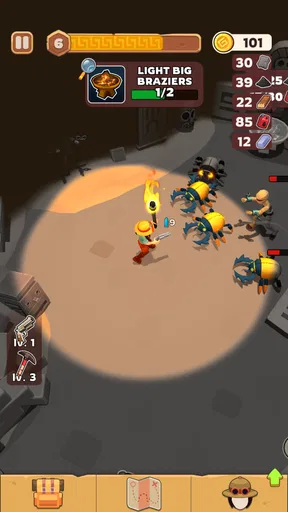
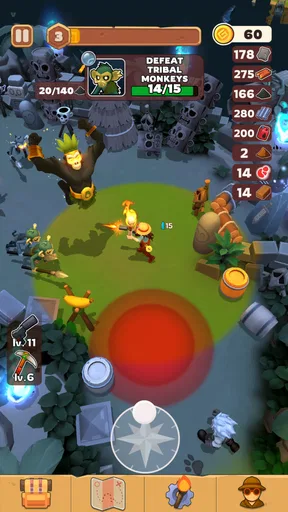
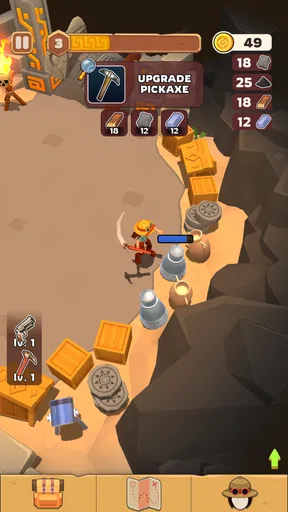
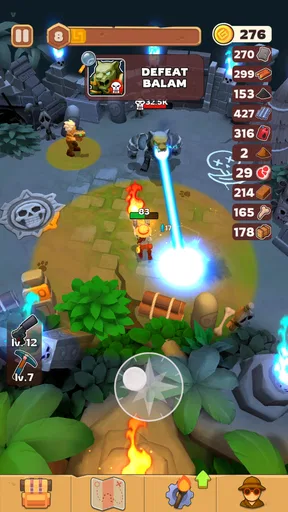
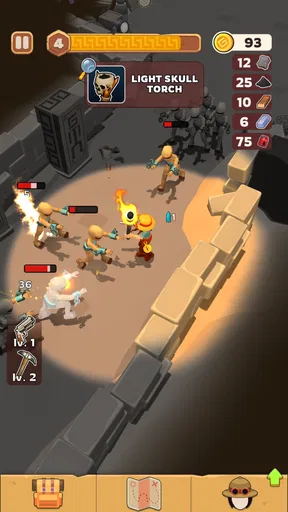
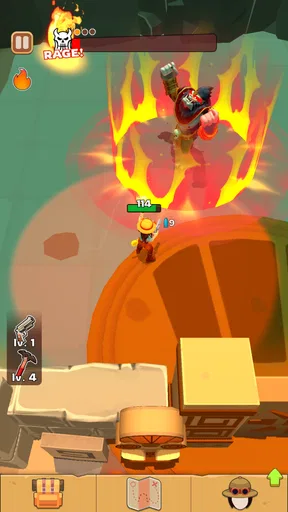
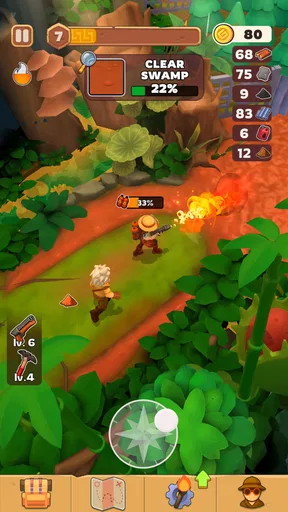
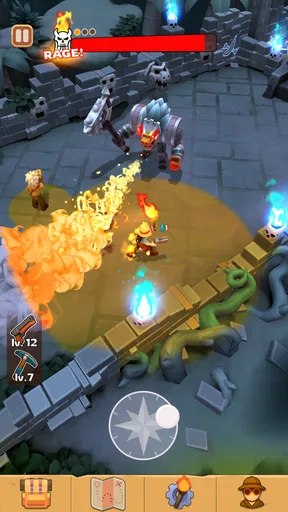
Our Review of After Dark - Survival Tomb
 Analysis by Appyee
After Dark - Survival Tomb is the kind of role-playing game I can pick up for a short session and still feel that I made a meaningful decision. Its premise is easy to understand: I enter an ancient tomb, keep a torch alive, deal with monsters, and work toward better equipment. What makes the experience more interesting than that simple outline is the pressure created by limited safety. Exploring is tempting, but every step deeper asks whether I am prepared to handle the next threat.
I reviewed it as a mobile game rather than expecting a full-scale console role-playing adventure. That distinction matters. This is a free game from SayGames Ltd, aimed at quick, readable encounters instead of long dialogue scenes or an enormous world map. The store summary focuses on lighting a torch, fighting monsters, crafting gear, and surviving the tomb, and those elements give the game its identity without burying the player in complicated terminology.
My overall impression is positive, especially for players who enjoy short survival-RPG sessions where planning matters more than memorizing a huge rulebook. It is less suitable if you want a deep story, a large party of characters, or a traditional role-playing campaign that can occupy an entire evening. The appeal here is the tension of making the next move while deciding how much danger is worth accepting.
How the tomb turns simple choices into a plan
The torch is more than a visual detail. It gives the setting a clear rhythm: light creates confidence, darkness creates uncertainty, and the player has to think about progress rather than simply walking forward. I found myself treating each stretch of exploration as a small planning problem. Do I push farther because the next reward may improve my equipment, or do I play safely and prepare before taking another risk?
That decision space is the strongest part of the game. The controls and objectives are approachable, but the atmosphere encourages me to slow down mentally. A monster encounter is not only about attacking. It is also about whether I arrived with enough preparation, whether my current gear is worth protecting, and whether a risky route is sensible when I have already made good progress.
This makes the game a better fit for players who like risk management than for people who want constant action. The tomb is most enjoyable when I pay attention to the relationship between exploration and survival. Rushing can make a short session feel wasteful, while cautious play gives each successful step more weight.
A useful habit is to decide on a stopping point before starting a run. If I am playing during a commute or while waiting for an appointment, I can focus on reaching a manageable milestone rather than treating every session as an attempt to go as far as possible. That approach reduces the frustration of making a hurried decision simply because I need to put the phone down.
Why the torch changes the way I explore
Many mobile role-playing games use energy bars, timers, or repeated battles to control the pace. After Dark - Survival Tomb gets much of its character from the torch and the feeling of entering a place that is not fully safe. Even when the underlying actions are straightforward, the lighting theme gives exploration a practical question: is visibility helping me advance, or am I spending too much of my safety for a reward that may not justify it?
I recommend thinking of the torch as a planning resource rather than something to react to at the last moment. The best time to consider it is before a dangerous stretch, not after the situation has already become uncomfortable. This small change in mindset makes the game feel more deliberate and helps prevent reckless pushes.
The setting also supports the game’s compact format. A tomb naturally breaks into moments of discovery, confrontation, and preparation. I do not need to remember a large open world or follow several unrelated quest lines. That makes it easy to return after a break because the central objective remains clear: survive the next part of the tomb with a better plan than the last time.
Crafting is most useful when it answers a problem
Crafting gear gives the progression a practical purpose. I prefer using equipment improvements to solve a specific weakness rather than treating every upgrade as automatically valuable. If a recent encounter exposed a defensive problem, improving survivability may be more useful than chasing a general increase in power. If I am handling enemies comfortably but struggling to make progress, a different kind of improvement may deserve priority.
This is one of the game’s more useful decision-making lessons: resources feel more valuable when they are connected to a clear objective. Instead of spending immediately because an option is available, I get better results by asking what I want the next attempt to accomplish. That could mean surviving a dangerous section, making exploration more consistent, or reducing the chance that a promising run ends because I was underprepared.
New players should avoid turning crafting into a shopping habit. I found it more satisfying to keep a small mental record of what caused trouble and use that observation to guide the next improvement. This creates a simple feedback loop: explore, notice the weakness, craft with purpose, and test whether the change actually helps.
Risk, reward, and the cost of pushing deeper
The game’s central tension comes from the fact that progress is attractive precisely because it can become dangerous. A safe approach may feel slow, but a reckless approach can undermine the value of everything already achieved in a session. I liked that the tomb encourages me to consider the quality of a run, not only its length.
For example, imagine playing after work with only ten minutes available. I might begin with the intention of improving gear, then find a promising route that invites me farther in. The smart choice is not automatically to retreat or continue. It depends on whether my current equipment and preparation support another encounter. If the next section demands a level of confidence I do not have, ending the session with useful progress can be better than gambling it for a possible reward.
This is where the game separates itself from casual action games that reward constant forward movement. After Dark - Survival Tomb asks me to value controlled progress over reckless momentum. That does not mean every decision must be conservative. Taking a calculated risk is part of the fun, but the risk should have a reason behind it.
The reward structure also works better when I give myself a short-term goal. “Go as far as possible” is vague and can encourage poor choices. “Improve one piece of gear,” “learn how a threat behaves,” or “reach the next safe point” creates a clearer horizon. Once that goal is achieved, I can decide whether continuing is sensible rather than drifting into a longer run without a plan.
When a safe retreat is the better victory
Players who are used to action games may initially feel that retreating or stopping is a failure. I do not see it that way here. If the game has already taught me something about a monster, a route, or a gear weakness, that information can be as useful as a reward. A failed push is less frustrating when it produces a specific lesson for the next attempt.
I also found that the game rewards patience in a less obvious way. Repeating the same approach without changing anything is rarely a good plan. If an encounter keeps going badly, the answer should be to alter preparation, improve equipment, or change how aggressively I explore. Simply hoping that the next attempt will work better is not a strategy.
This makes the game approachable for beginners while still offering room for thoughtful play. A new player can understand the basic loop quickly, but an experienced mobile gamer can spend time refining decisions and reducing unnecessary losses. The depth comes from making better choices inside a small set of understandable actions.
Free access and the question of spending
The game is free to play, with optional in-app purchases ranging from $1.99 to $59.99 per item. That range is important to keep in mind before installing. I can approach the tomb without paying, but the presence of purchases means players should decide early how they want to handle optional spending.
My advice is to play the opening sessions as a test of whether the core loop is enjoyable on its own. If lighting the torch, fighting monsters, and improving gear already feel satisfying, the game has a solid foundation for you. If the basic loop does not hold your attention, spending will not solve that problem. I would also avoid buying impulsively after a frustrating run, because that turns a strategic game into a reaction to disappointment.
For families, the Everyone content rating makes the game easier to consider for a broad audience, although younger players may still benefit from guidance around optional purchases. The setting involves monsters and survival, but the presentation is designed around an accessible adventure rather than a mature role-playing experience.
Adapting instead of repeating the same run
The most important improvement a player can make is learning to treat every setback as information. When I lose momentum, I try to identify the exact reason. Was I too eager to explore? Did my gear fail to support the route I chose? Did I spend resources too early? This kind of review turns the next attempt into an experiment rather than a duplicate of the previous one.
That mindset is especially useful because the game’s basic actions are easy to understand. The challenge is not discovering a complicated control scheme. It is recognizing when a familiar approach has stopped working. If I always push forward as soon as the path opens, I may be ignoring the preparation that makes deeper exploration realistic.
A practical method is to change only one factor at a time. I might first adjust my equipment, then observe the result. On another attempt, I might keep the gear but explore more cautiously. This makes it easier to understand what actually improved the run. Changing everything at once may produce a better outcome, but it does not teach me why the result changed.
I also recommend separating learning runs from progress runs. During a learning run, I can pay attention to enemy behavior and explore a less familiar path without expecting a perfect result. During a progress run, I can use that knowledge more carefully. This gives the game a clearer planning horizon and prevents every attempt from feeling like a high-stakes test.
Who will enjoy this adaptation loop
After Dark - Survival Tomb is a good match for players who enjoy seeing a mistake become a better decision later. It suits people who like compact systems, gradual equipment improvement, and the feeling that caution can be rewarding. It is also a comfortable choice for someone who wants a role-playing game that does not require remembering a large cast or a complicated story before playing effectively.
I would be more cautious recommending it to players who dislike repeating areas, dislike resource pressure, or want immediate power growth in every session. The game’s satisfaction depends on accepting that some attempts are about learning and preparation. If you expect every run to produce obvious progress, the survival structure may feel restrictive rather than engaging.
It may also be a poor choice for someone looking for a social role-playing experience. The appeal here is personal decision-making in a dangerous environment, not group coordination or a large community-driven world. Likewise, players who prefer long narrative scenes may find the tomb’s focused survival loop too narrow.
How the experience develops over time
At first, the game’s attraction comes from its clarity. I know what I am doing, why the torch matters, and why better gear can change my chances. Over time, the interest shifts toward efficiency. I begin to notice which choices are genuinely helping and which habits merely feel productive.
That is where the game has more depth than its simple premise suggests. It does not need a huge number of systems to create meaningful decisions. The combination of visibility, monsters, crafting, and survival gives me enough variables to consider whether I am planning well. The long-term question becomes less about finding one perfect move and more about building a reliable routine.
My preferred routine is to enter with a clear purpose, avoid spending resources without a reason, observe what causes trouble, and then adjust before the next serious push. This makes the game feel less like a sequence of disconnected battles and more like a series of small expeditions. Each expedition can contribute either progress or knowledge, and the best sessions contribute both.
The current version is 1.10.0, and the game requires Android 8.0 or later. That makes the technical entry point reasonably approachable for many Android users, but compatibility should still be checked against the device I plan to use. I would also keep expectations realistic: a supported device does not automatically mean the game will be the ideal fit for every screen size or playing habit.
The game has gathered an average rating of 4.4 from around 5.8 thousand ratings, with more than 100 thousand installs. Those figures suggest that the focused survival concept has found an audience, but they should not replace personal judgment. A player who enjoys tense exploration may connect with it immediately, while someone seeking a conventional story-heavy RPG may not.
How it compares with familiar mobile RPG alternatives
Compared with a traditional turn-based role-playing game, this experience puts less emphasis on party composition, dialogue, and lengthy character development. Its strength is the immediate relationship between what I carry, where I explore, and how much danger I accept. If I want a story campaign with many characters and carefully scripted events, a conventional RPG would probably serve me better.
Compared with an endless action game, it feels more deliberate. The torch and survival theme give exploration a reason to slow down, while crafting makes preparation feel connected to the dangers ahead. If I want a game that can be played almost mindlessly for a few minutes, an arcade-style alternative may be a better choice.
Compared with a large survival sandbox, the tomb offers a more focused experience. I do not need to manage an enormous world or create a long-term base-building project to understand what I should do next. That focus is convenient on a phone, though players who enjoy unrestricted exploration may find the contained structure less exciting.
The trade-off is clear: After Dark - Survival Tomb exchanges breadth for concentration. I get a recognizable loop that is easy to return to, but not the variety of a massive role-playing adventure. For me, that is a strength when I want a compact game and a limitation when I want a world that keeps expanding in different directions.
My strategy verdict for the right kind of player
After spending time with After Dark - Survival Tomb, I see it as a focused mobile RPG built around judgment. The torch creates atmosphere and pressure, monsters give exploration consequences, and crafting turns mistakes into opportunities to prepare better. Its most satisfying moments come from choosing when to continue, not from simply moving as quickly as possible.
I would recommend it to a friend who enjoys short sessions, gradual improvement, and games that reward paying attention. It is particularly appealing if you like the idea of making a plan, testing it in the tomb, and refining it after a setback. The free entry point makes it easy to try, while the Everyone rating keeps the presentation broadly accessible.
I would skip it if my priority were a deep narrative, multiplayer teamwork, open-ended sandbox building, or constant high-speed action. The optional purchase range also means I would approach spending carefully and judge the game by its free core before considering anything extra. That is not a criticism of the concept; it is simply part of deciding whether the game fits my habits.
For a practical first session, I suggest playing without rushing, setting one modest objective, and treating the first setback as a source of information. Pay attention to which encounters expose weaknesses, then use crafting to address those weaknesses instead of upgrading randomly. Most importantly, learn to recognize when a safe stopping point is a successful decision. That is the habit that makes the tomb feel strategic rather than merely dangerous.
In the end, the game works because its theme and mechanics point in the same direction. The darkness makes me cautious, the monsters make preparation matter, and the gear system gives that preparation a purpose. It is not trying to replace every other kind of role-playing game. It offers something narrower and more immediate: a compact survival adventure where a thoughtful choice can make the next expedition noticeably better.
Verdict
Strengths of After Dark - Survival Tomb
- Atmospheric visuals create a memorable tomb-exploration experience.
- Simple controls make movement and exploration easy to understand.
- Short sessions suit quick play on mobile devices.
- Environmental details reward careful observation and exploration.
- The survival theme adds tension beyond standard puzzle gameplay.
Limitations of After Dark - Survival Tomb
- Dark scenes can make some areas difficult to read on smaller screens.
- Progress may feel slow for players seeking constant action.
- Limited variety may reduce replay value after completing the tomb.
- Some challenges can feel trial-and-error rather than skill-based.
- The tense atmosphere may not appeal to casual or younger players.
Other Releases by SayGames Ltd
View All
Turbo Stars - Rival Racing
Racing4.6

Johnny Trigger: Action Shooter
Action4.6

DOP 4: Draw One Part
Puzzle4.4

DOP: Draw One Part
Puzzle4.4
Similar Picks in This Category
View All
Hair Dye
CrazyLabs LTD4.4

Monster High™ Beauty Salon
CrazyLabs LTD4.5

Bus Simulator - Bus Games 3D
Jima Apps4.4

Flight Pilot: 3D Simulator
Wildlife Studios4.1


Super Stylist Fashion Makeover
CrazyLabs LTD4.4
Frequently Asked Questions
What is After Dark - Survival Tomb about?
After Dark - Survival Tomb is a survival adventure game focused on exploring a dangerous tomb after nightfall. You must navigate dark corridors, search for useful items, solve environmental puzzles, and avoid or overcome threats hidden inside. Progress depends on careful exploration, resource management, and making sensible decisions when visibility and supplies are limited.
Can I play After Dark - Survival Tomb offline?
The game appears designed primarily as a single-player experience, so much of the core exploration and survival gameplay may be available without an active internet connection. However, connection requirements can vary by device and version, particularly for advertisements, analytics, updates, cloud features, or purchases. It is best to launch it online once before relying on offline play.
Is After Dark - Survival Tomb suitable for children?
Parents should review the game’s age rating before allowing children to download it. The tomb setting, darkness, suspense, hostile encounters, and survival-focused atmosphere may be frightening for younger players. It is not necessarily a graphic horror title, but its tension and jump-scare-style moments can still feel intense, especially when played with headphones or in a dark room.
Does After Dark - Survival Tomb contain ads or in-app purchases?
Depending on the platform and current release, After Dark - Survival Tomb may include advertising or optional in-app purchases. Ads can potentially appear between attempts, during progression, or when requesting certain bonuses, while purchases may offer convenience or additional content. Check the store listing and the in-game purchase screen carefully before downloading or spending money.
What devices are recommended for playing After Dark - Survival Tomb?
A reasonably recent Android or iOS device is recommended for a smoother experience, particularly because dark environments, lighting effects, sound, and animated hazards can affect performance. Make sure your phone has enough free storage and an updated operating system. Older devices may experience longer loading times, reduced visual quality, overheating, or occasional frame-rate drops.
Play our best games!


